In this article, we introduce a novel method of quantifying pump station energy efficiency. For an automobile, everyone is familiar with Miles-Per-Gallon or MPG.  Today, we are going to introduce an equivalent measure of pump station efficiency that every water utility Telemetry/SCADA system should include: GPK. Automobile Efficiency… Have you ever calculated the average gas mileage for your automobile?  … Read More →

When totalizing the total accumulated flow through a non-absolute-encoder flow meter, it is generally preferable to interface with a pulse-per-volume signal (eg. 1 pulse per gallon). However, certain flow meters only offer a 4-20mA signal that is proportional to rate-of-flow. Examples include certain Parshall Flume-Type Wastewater Flow Meters, Differential-Pressure Flow Meters, WH Power Meters, and many … Read More →

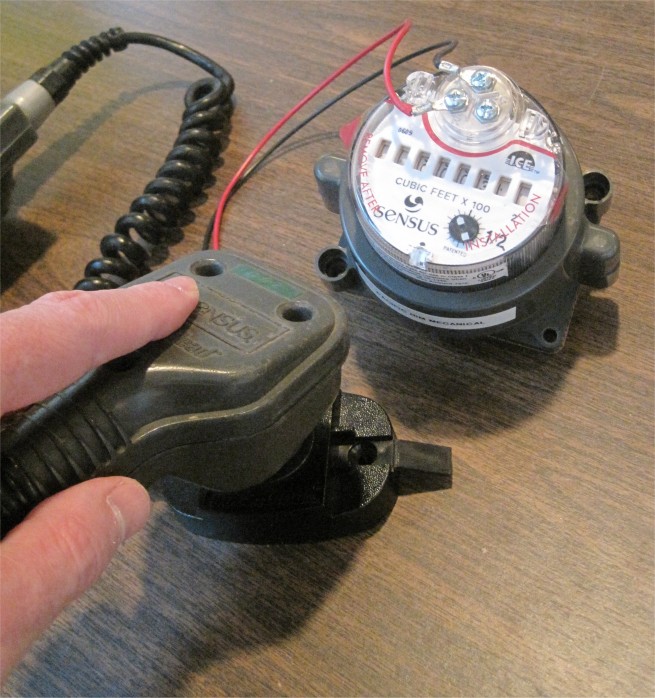
In addition to its ability to read most encoder-type flow meters, the EtherMeter also features pulse-input support. The following Application Note details the procedures for connecting a Sensus High-Speed Pickup (Pulse) Register to an EtherMeter; and it also describes an example of modified Setup Menu parameters for the High-Speed Pickup: https://scadametrics.com/PDF/App_Note_014.pdf Note that the Sensus … Read More →

Recently, an interesting project was completed at the water custody-transfer point between Williamsville (IL) and Springfield (IL), where Williamsville purchases bulk water from Springfield and transmits it through a system of water towers, pumping stations, and distribution mains. In the scope of this project, Williamsville installed EtherMeters into their existing distribution SCADA system for the purpose of automated report … Read More →

The Preciseline Pressure Transducer (manufactured by Keller-America ), like our EtherMeter, offers a digital Modbus-based solution to a water telemetry problem that was previously solved by analog (4-20mA) instrumentation. In the case of the Preciseline, the water pressure signal is converted into Modbus; whereas in the case of our EtherMeter, error-free totalization and flow-rate data is collected … Read More →

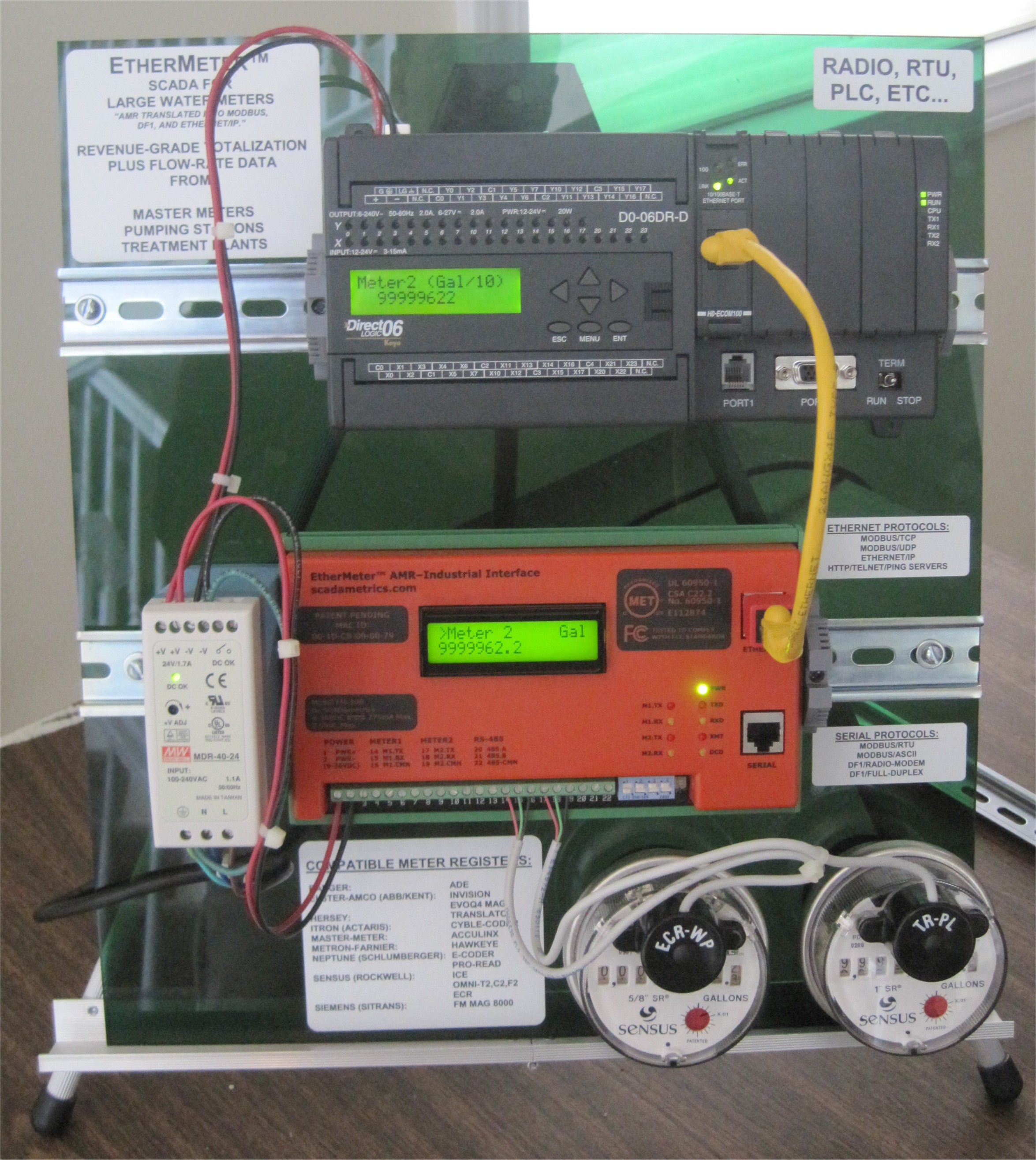
The EtherMeter is the only known device that can calculate, transmit, and display rate-of-flow and totalization from all the major encoder-based water meters.  And this fact can come in handy for a multitude of applications. For example, there are often occasions where bulk water users wish to visually monitor flow rate through a variable speed pump or … Read More →

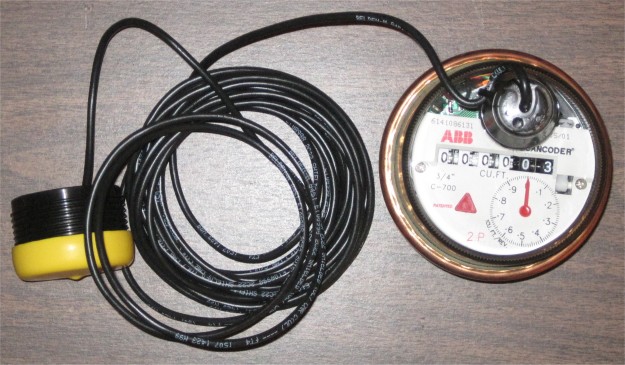
A new application note has been posted to the support page of scadametrics.com.  The note documents the procedures for programming a Sensus “ICE” register (index) for maximum metering resolution and EtherMeter compatibility. Maximized resolution improves the connected SCADA system’s ability to monitor realtime flow-rate and totalization from both water and gas meters. While it is preferable (and simpler) for the customer to … Read More →

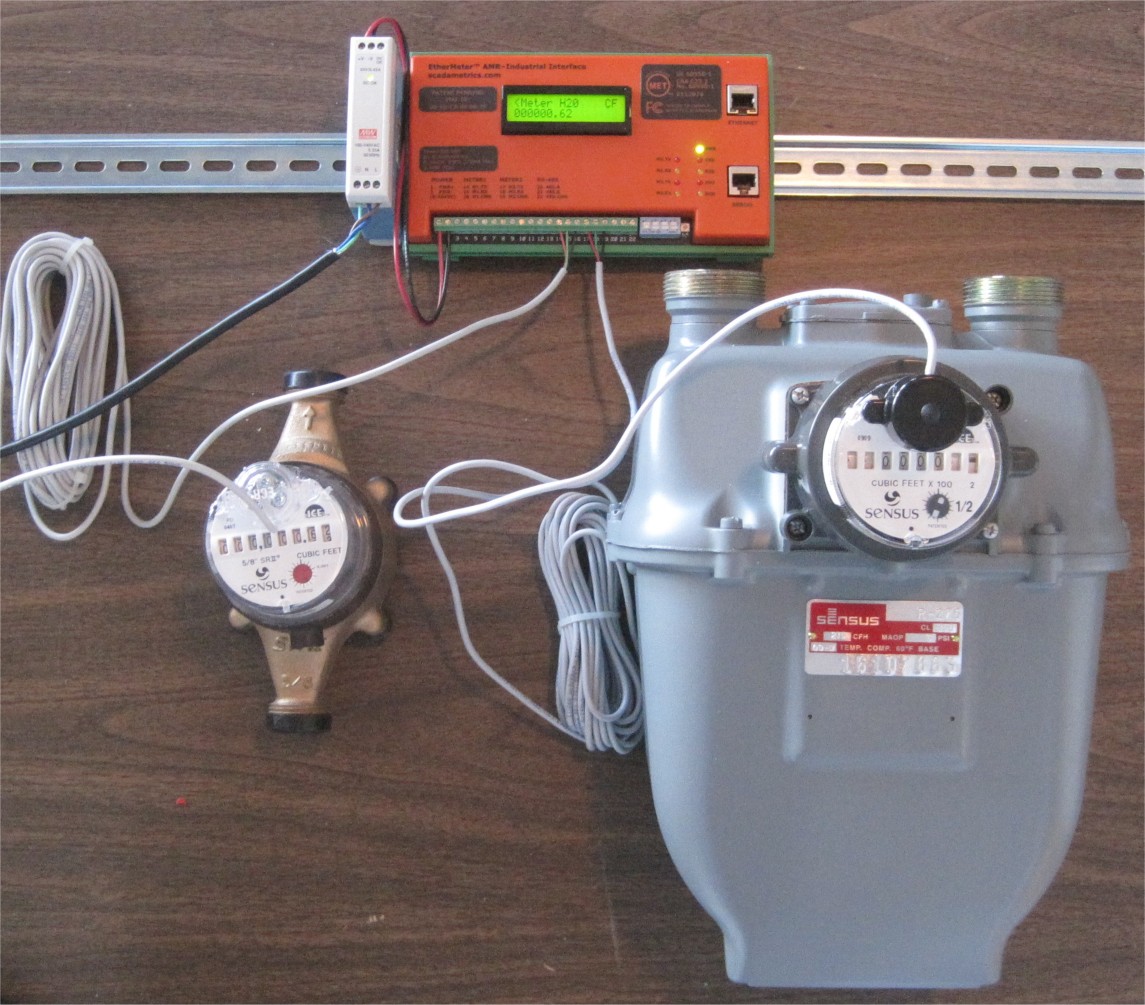
The EtherMeter can be used to enable a SCADA system to collect both water and gas meter totalization and instantaneous flow-rate — even simultaneously. An interesting application is the use of a single EtherMeter connected to an encoder-based water meter plus an encoder-based gas meter.  In the example illustrated below, a Sensus SR-II water meter and a Sensus R-275 temperature-compensated … Read More →

A new white paper has been posted to scadametrics.com.  In this paper, methods are described for connecting a combination of water and gas meters to an automation network. Because Itron/Actaris offers encoder-type signaling, in the form of the “Cyble-Coder” technology — in both their water and gas meters — the Itron/Actaris models are emphasized in this article. Click … Read More →

When connecting a Sensus Omni Meter (T2, C2, R2, or F2) to an EtherMeter, it is important to connect to the proper Omni cable.  A potential point of confusion is that the Omni meter features two identical, integrated cables.  In order to clarify the wiring, an application note (Application Note #6) has been published on scadametrics.com with wiring … Read More →